

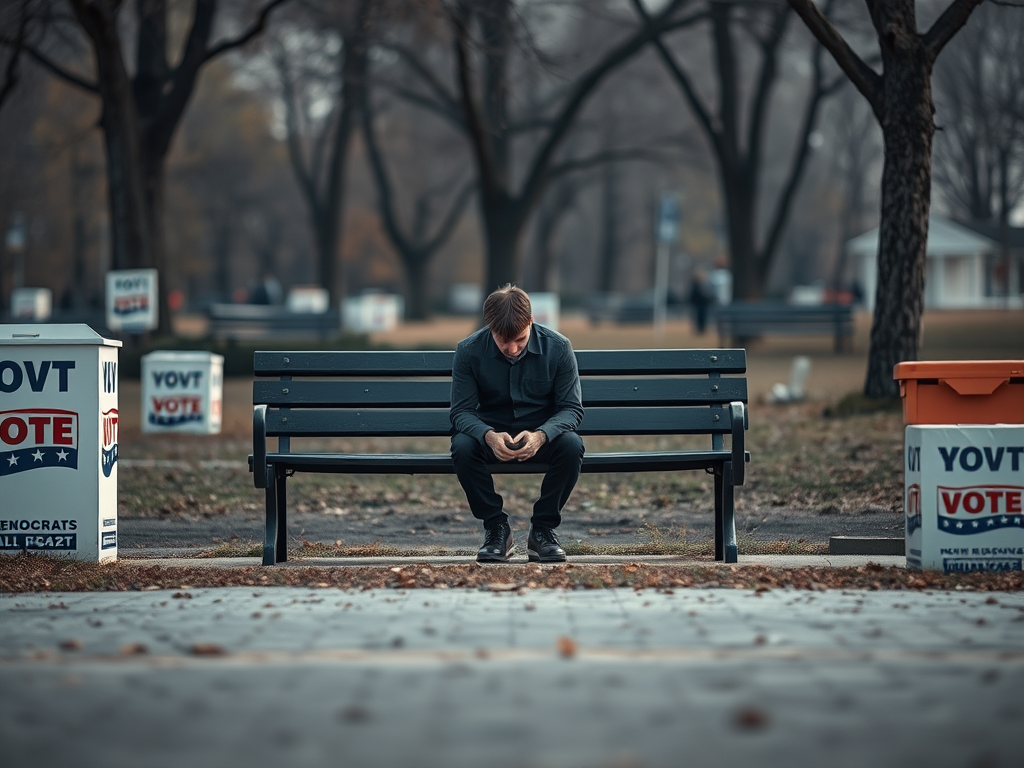
For years I looked at non-voters with frustration. I saw them as disengaged passengers in a political vehicle that demanded our collective steering. If you don’t vote, I’d say, you have no right to complain. Yet the more I’ve examined the machinery of modern democracy, the more I understand why so many have quietly stepped off the ride altogether.
What if apathy isn’t apathy at all? What if it’s recognition?
The political class depends on the illusion of distinction — the comforting fiction that change is just one ballot away. But for millions, the pattern has become impossible to ignore different faces, same outcomes. Every administration promises reform, yet the deeper structures remain untouched. The powerful stay powerful; the powerless stay busy arguing about which mask of the same machine is least offensive.
This isn’t cynicism — it’s observation. It’s the slow, rational conclusion reached after years of betrayal. When one sees that lobbyists write legislation, that war budgets pass effortlessly while social one’s stall, that corporate interests and state interests are now virtually indistinguishable — it becomes difficult to believe that a tick in a box can alter anything fundamental.
So, the non-voter steps back. Not always in ignorance, but often in clarity. They see that to “participate” in such a system is to validate it, to perpetuate the illusion that public consent still shapes power. Their refusal, though quiet, is a kind of protest — one stripped of spectacle.
Of course, disengagement carries its dangers. Withdrawal creates a vacuum easily filled by the very forces people reject. But it also signals something important: the public’s intuitive recognition that reform within a corrupted structure is often impossible. Real change, if it comes, rarely begins at the ballot box. It starts with awareness — with people realising that the system’s failures are not glitches but features.
So perhaps it’s time to stop shaming the non-voters and start listening to them. They may not have given up on justice or fairness. They may simply have given up on pretending.
This post is a continuation of – The Machinery of Power: How Illusions Keep Democracies Obedient

Leave a Reply