


My first computer wasn’t powerful, fast, or particularly impressive by today’s standards. But it was mine, and that mattered far more than any spec sheet ever could.
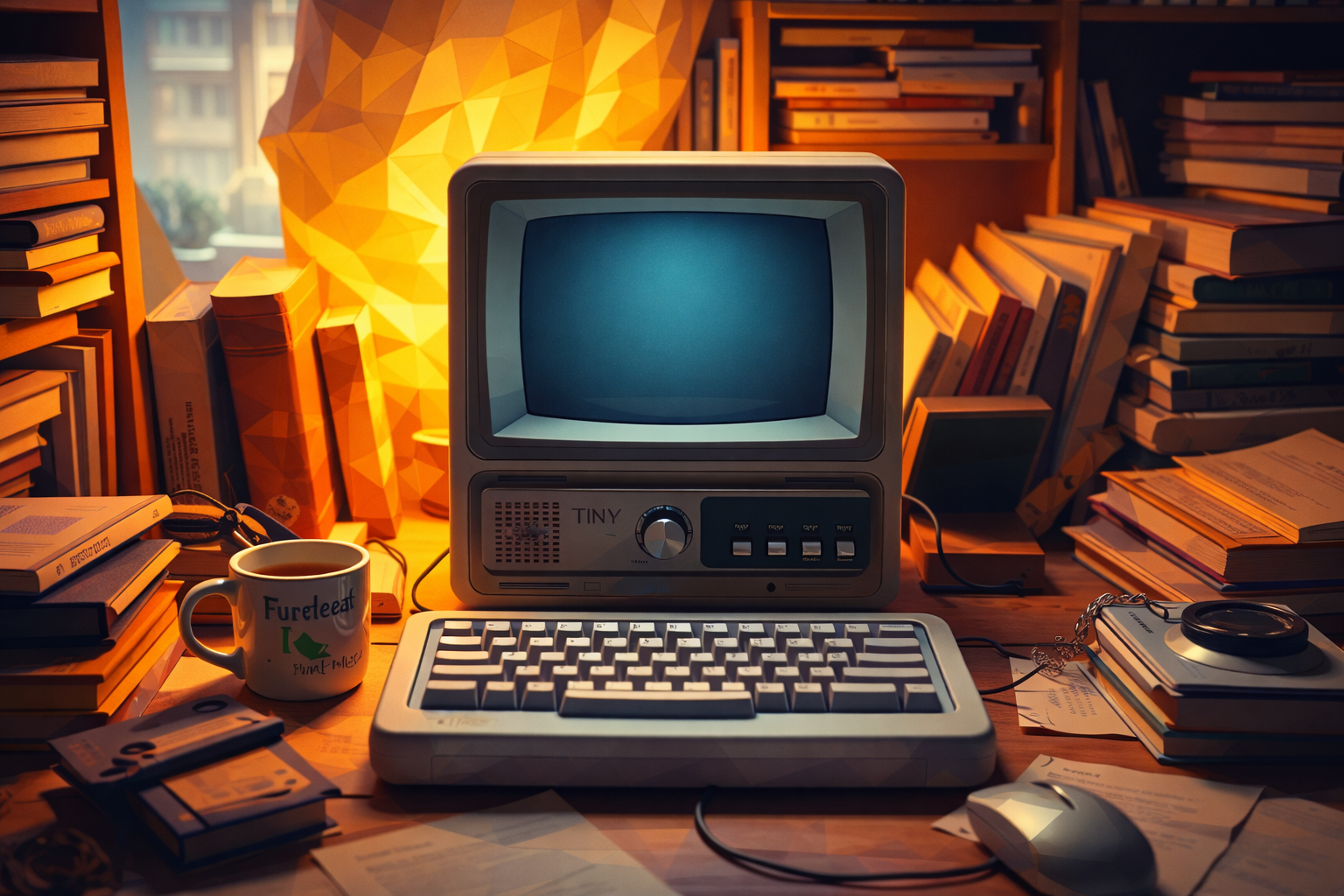
It was a Tiny PC — (that was the brand). A proper home computer, from a time when “gaming PC” wasn’t really a thing yet. You could play games, sure, but nothing like the sprawling, hyper-optimised worlds we have now. Back then, computers weren’t sold as experiences or lifestyles. They were just machines, sitting quietly in the house, waiting to be explored by anyone curious enough to sit down and start clicking.
For me, that computer was an entry point into an entirely new world. A quiet, glowing box that opened doors I didn’t yet know existed. At first it was curiosity — clicking things, installing things, breaking things. Then it became fascination. Before long, it turned into something deeper: a sense that this machine wasn’t just something I used, but something I connected with.
I was on it day and night. Browsing the internet when it still felt like a place you explored rather than something that followed you everywhere. Installing applications purely to figure out what they did. Learning the only way I ever really have — by doing, by experimenting, by working it out rather than being shown.
That Tiny PC was also the first computer I ever upgraded myself. I moved it over to Windows XP, and it felt monumental at the time. Not just because it was newer or better, but because it proved something important: I could change the machine. I wasn’t locked into what I’d been given. I could shape it, improve it, and understand it. That idea stuck, and it quietly became a foundation for everything that followed.
So when my parents decided to sell it, it genuinely hurt. I was gutted. Heartbroken, even. That computer wasn’t replaced either. There was no immediate upgrade, no next machine waiting in the wings. Just a gap. Years passed before I had a computer of my very own again.
When I finally did, it was a blue Toshiba Satellite laptop. Portable. Personal. Entirely mine. But even then, it didn’t feel like a beginning. It felt like a continuation. The passion had already been lit years earlier on that Tiny PC — the curiosity, the confidence, the comfort with software, systems, and problem-solving.
Looking back, it’s strange how attached we can become to machines. But it was never really about the hardware. That first computer didn’t just run programs — it ran possibilities. It represented independence, discovery, and the realisation that complex systems aren’t magic. They’re just things waiting to be understood.
And once that door opens, it never really closes again.

Leave a Reply