

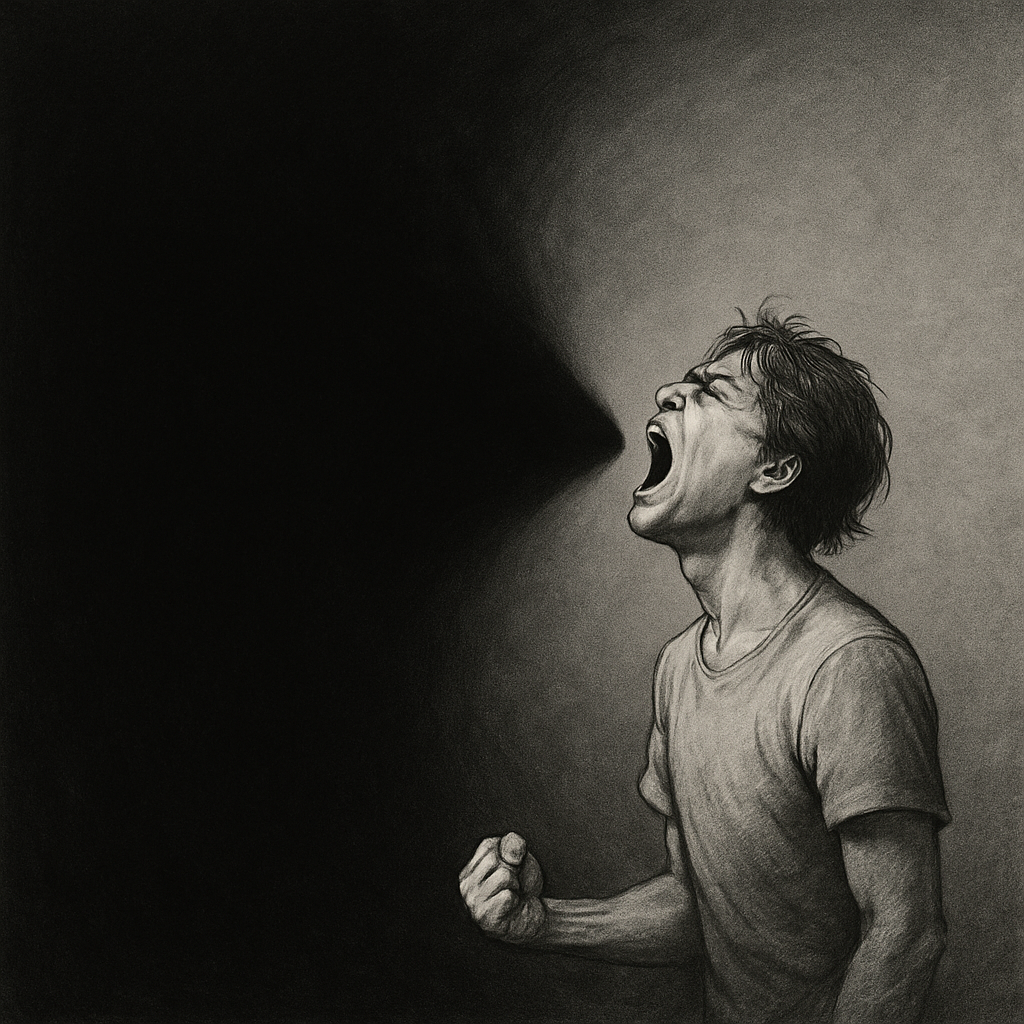
I’m shouting because you hurt me in the worst way possible.
I’m shouting because in some fucked up way, despite everything. I still love you.
I’m shouting because I want to hate you.
I’m shouting because I’m angry.
I’m shouting because I’m scared.
I’m shouting because I’m dying inside.
I’m shouting because I don’t know what else to do to make you understand the pain I’m in.
I’m shouting because you forgot us.
I’m shouting because if I stop, I don’t know what I’ll do.
I’m shouting because I don’t understand why you don’t understand.
I’m shouting because I’m trying to be heard in the deafening silence.
I’m shouting because what do I do in the silence?
In the silence all I have is my own thoughts
In the silence, I’m alone.
In the silence, I don’t get answers.
In the silence I spiral.
In the silence there is darkness.
In the darkness, is the end.
But, why am I shouting?
Karl
This poem is a raw and emotional response to someone asking, “Why are you shouting?” it articulates all the reasons that I can’t in that moment, because of the pain I am experiencing — but the question itself is rhetorical. She already knows the answer, because she’s been in this place before, in a past relationship. She knows exactly what this kind of pain feels like — the desperation, the silence, the spiralling — but now, when it’s her causing it, she can’t bear to face it. The question isn’t born from confusion, but from avoidance. The shouting becomes not just an expression of heartbreak, but a refusal to let her silence erase the hurt she’s caused. The final line — “But, why am I shouting?” — turns the question back on her. It’s a challenge. A mirror. A reminder that pretending not to understand doesn’t erase the truth.

Leave a Reply